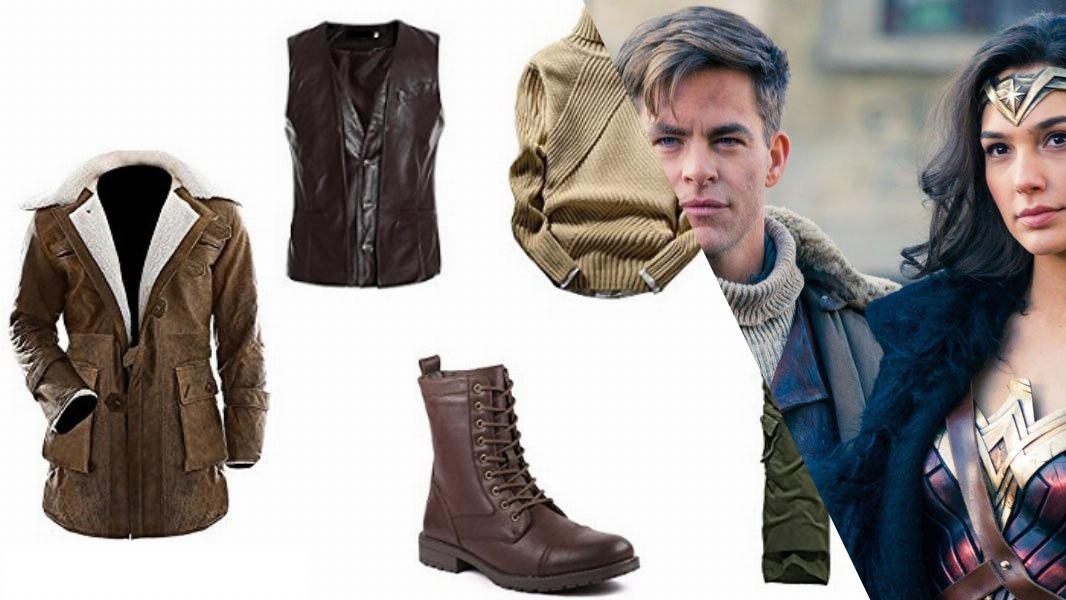
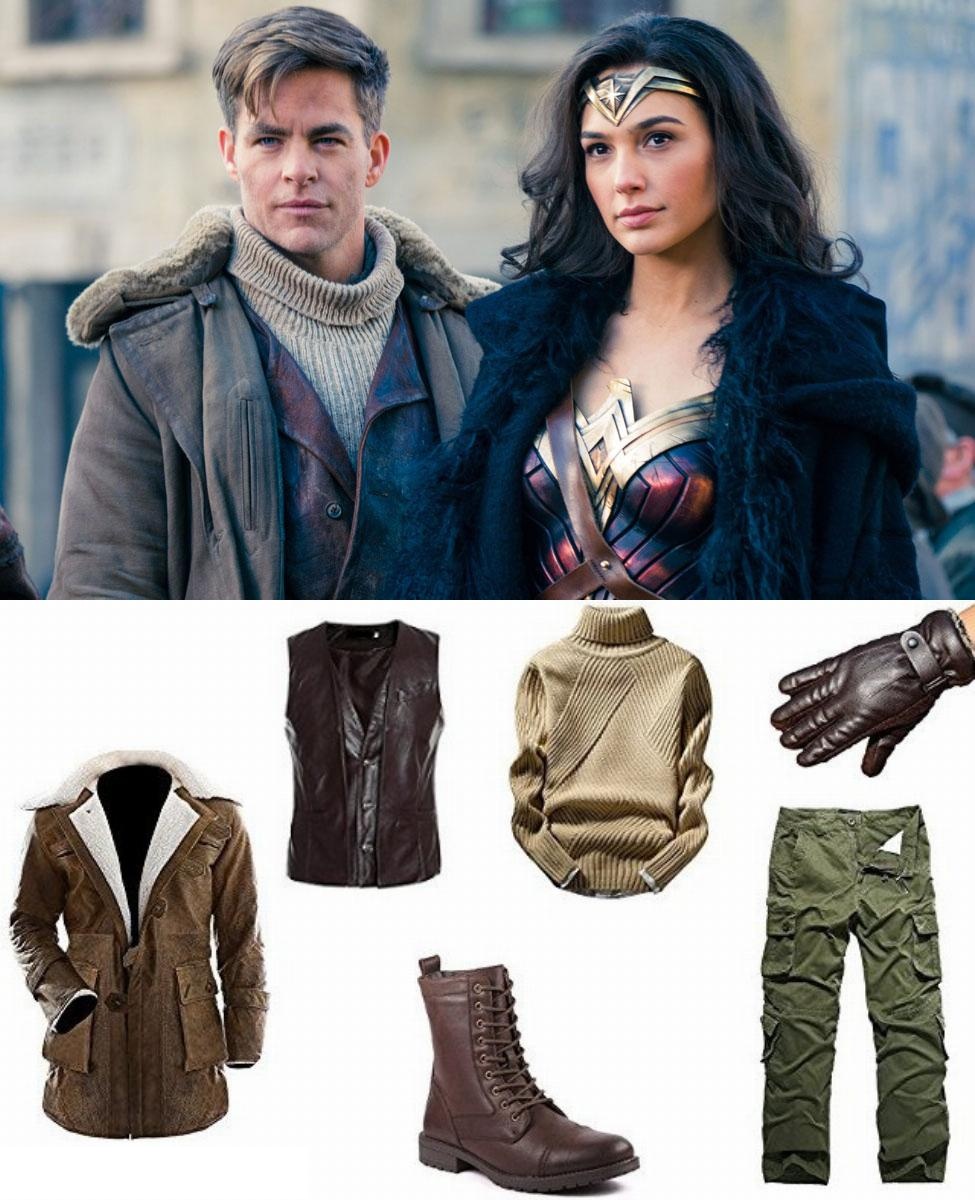
Steve Trevor’s wardrobe in Wonder Woman is rooted entirely in functional World War I aviation and field gear. Rather than a polished military dress uniform, he spends most of the story in practical cold-weather layers: a heavy turtleneck, a leather vest, sturdy field trousers, and an oversized trench coat that ties the silhouette together.
Recreating this outfit comes down to texture and layering. Because the individual garments are based on early twentieth-century workwear and flight gear, standard retail pieces can get remarkably close if you focus on substantial fabrics, muted earth tones, and a slightly worn-in look.
The Base Knit and Flight Vest
Steve wears an oatmeal or khaki ribbed knit turtleneck under a sleeveless leather vest. The collar of the turtleneck rolls high up the neck, and the knit should feel heavy enough to hold its shape beneath outer layers. A lightweight cotton turtleneck tends to collapse and look like modern casualwear, so opt for a ribbed acrylic or wool-blend sweater with some bulk.
Over the knit goes a brown leather vest. In the film, Steve’s vest has a shearling or fleece collar and a front zip or button closure, resembling early open-cockpit aviation gear. A standard brown leather vest works well here as long as it fits close to the torso; if it is too loose, fitting a heavy coat over it becomes bulky and uncomfortable.
Outerwear: The Trench Coat
The centerpiece of Steve’s cold-weather silhouette is his full-length brown leather trench coat. It has a broad lapel, double-breasted buttoning, and a weathered, buffed leather finish that looks like it has survived trenches and wet airfields.
When sourcing a trench coat, pay attention to length and drape. The hem should ideally fall around mid-thigh or near the knees. If a faux leather coat arrives with a high shine, lightly buffing the high-friction points with a damp cloth or fine sandpaper softens the surface sheen and gives it the rugged, field-tested appearance seen on screen.
Field Trousers and Combat Boots
For the lower half, Steve wears olive green field trousers tucked directly into high boots. Cargo pants or surplus military trousers in an olive drab or muted army green are ideal substitutes. The cut should be relatively straight through the leg so that the fabric tucks neatly into the boot shafts without creating huge bunches around the calves.
The boots are tall, lace-up military combat boots in dark or medium brown. Early twentieth-century aviation boots featured high lacing and sturdy soles. If your boots have modern synthetic accents or bright hardware, swapping out the laces for flat waxed brown laces or applying brown shoe cream helps blend them into a period-appropriate look.
Gloves and Grooming
Short brown leather driving gloves complete Steve’s flight gear. A simple wrist-length pair with minimal decorative stitching works best. They should fit snugly around the fingers and tuck slightly under the sweater cuffs.
For grooming, Steve sports a classic side-parted military crop with volume on top and shorter sides, paired with subtle stubble. Weathering the entire outfit with a tiny amount of dry brushing or watered-down brown acrylic paint along the boot seams and jacket edges anchors the garments into a believable wartime appearance.