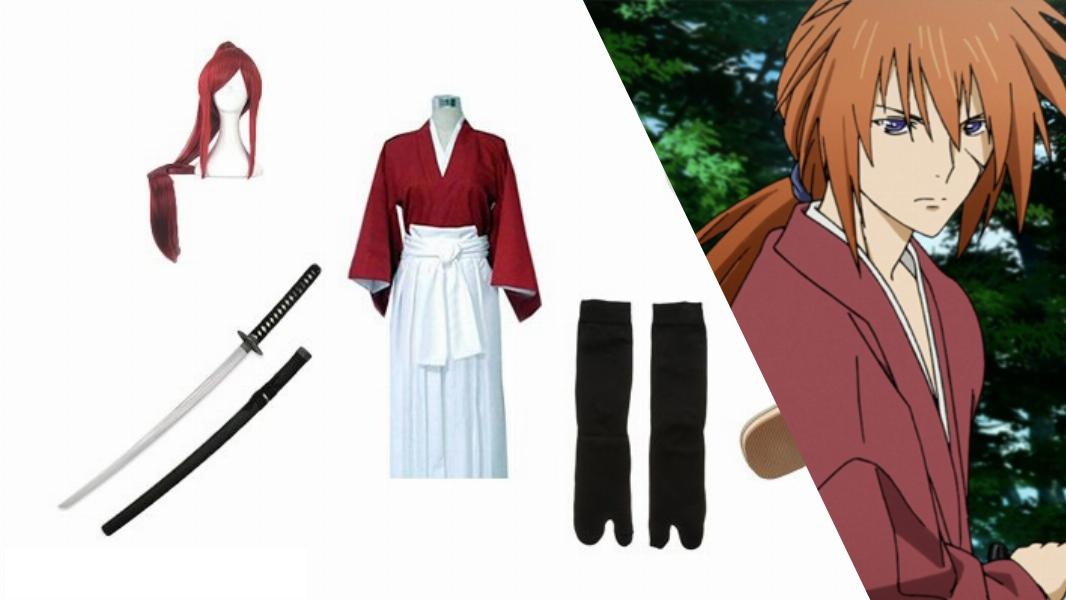
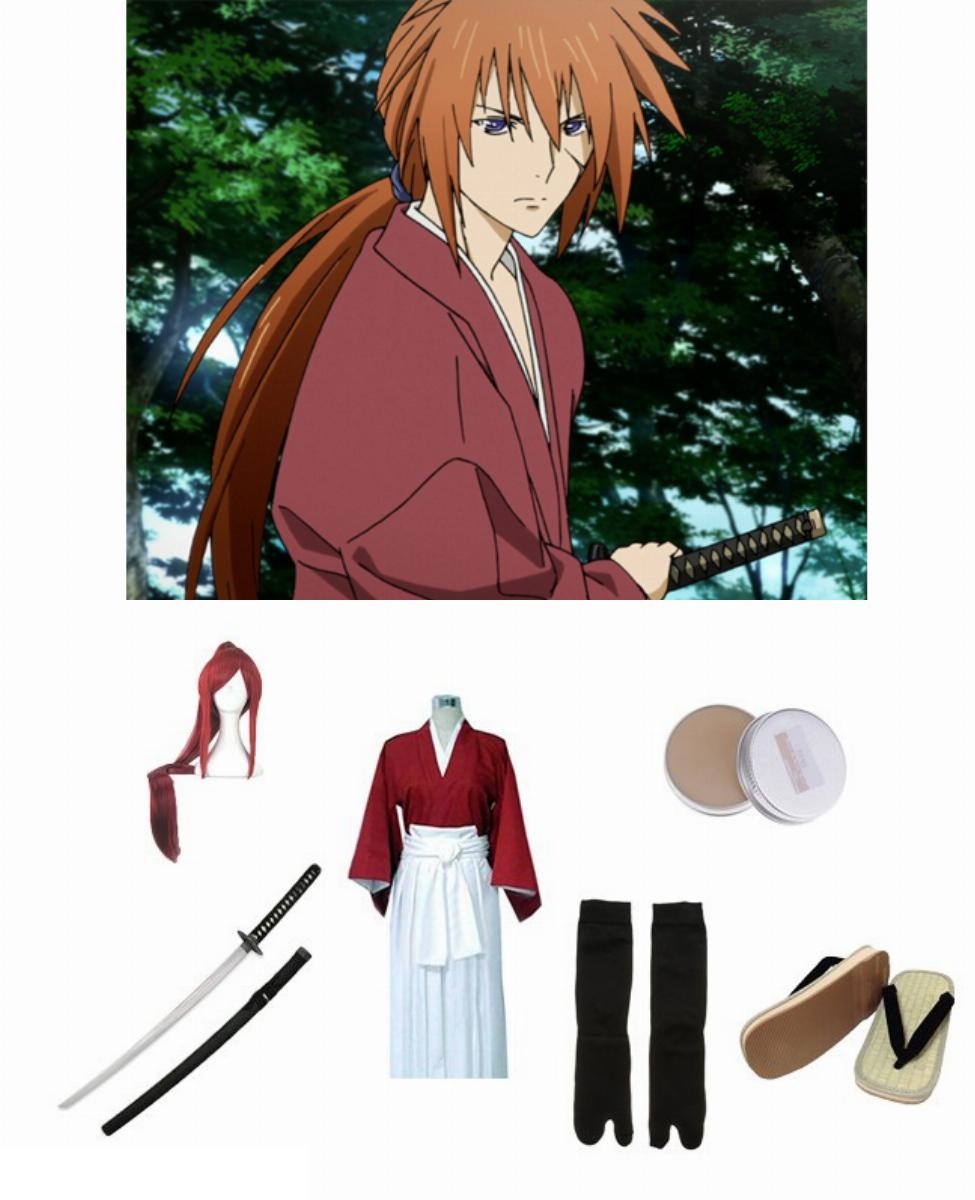
Kenshin’s wandering swordsman appearance relies on clean drape, traditional Japanese silhouettes, and a handful of distinct visual markers. The red robe top, wide pleated white trousers, untamed crimson ponytail, and faded cross-shaped cheek scar create an unmistakable profile from any distance.
Because this outfit is rooted in historical garments rather than complex fantasy armor, putting it together successfully depends on how the fabric sits on your frame, tying the waist ties securely, and matching the character’s signature hair and facial markings.
Red Kimono and White Hakama
The foundation consists of a red kimono top worn over a white undergarment, paired with wide-legged white pleated hakama. The red top wraps left over right across the chest, exposing a band of white collar underneath. Kenshin wears his robe casually relaxed rather than rigid and formal, allowing the neckline to sit slightly open.
Hakama pleats provide dramatic volume when moving, but keeping them at the correct height requires proper tying. Position the front waistband around your natural waist, wrap the longer front cords behind your back, bring them forward to cross over, and tie them off securely. Then settle the back panel over the crossed ties and bring the shorter rear cords forward to knot in front. A dedicated Himura Kenshin Kimono set provides the properly matched red top and white hakama together, saving time spent color-matching separate pieces.
Hemline length plays a big role in mobility. The bottom of the hakama legs should graze right around the ankle bones. If the hems hang too low, they will drag across convention hall floors or catch underneath your heels during steps.
Styling the Ponytail Wig
Kenshin’s hair features a vibrant reddish-orange hue, face-framing fringe, and a long low ponytail that falls down his back. Starting with a base like the Himura Kenshin 100cm Wig gives you ample fiber length to gather into that signature low tie while retaining enough volume across the crown and temples.
To get the bangs looking right, use thinning shears to trim vertically into the ends rather than cutting straight across. This creates the jagged, parted pieces that hang around Kenshin’s cheeks and forehead. A light coat of matte hairspray keeps the side tufts angled outward without giving the synthetic strands an unnatural gloss.
Crafting the Cross-Shaped Scar
The cross-shaped scar on Kenshin’s left cheek is his defining physical feature, consisting of two intersecting diagonal slashes. Using Fake Scar Skin Wax gives the mark a realistic, slightly raised three-dimensional texture. Warm a tiny pinch of wax between your fingertips, roll it into thin threads, press the shapes onto clean skin, and gently blend the outer edges outward with a spatula or cotton swab.
Dust the wax lightly with translucent setting powder to eliminate any shiny residue. Finish by stippling pale pink, flesh-toned, and soft reddish-brown cream pigments over the ridge. This gives the scar the weathered appearance of healed skin rather than a fresh wound.
The Reverse-Blade Katana
The sakabato stands apart from conventional swords because the sharpened edge sits along the inner curve, leaving the outer spine blunt. When carrying a prop Reverse Blade Katana, ensure the construction complies with event prop policies. Most conventions prohibit sharpened metal or unbonded steel blades, making wooden or high-density foam options the standard choice for walking convention floors.
Slide the scabbard through the left side of your hakama waist cords, tilting the hilt slightly downward. Tucking the sheath firmly between the inner and outer cord layers keeps the prop from shifting or sliding loose as you walk.
Traditional Footwear and Tabi
Kenshin wears woven straw sandals over split-toe socks. Pairing Edoten IGUSA Setta Japanese Tatami Zouri Sandals with Tabby Toe Socks provides the traditional look while keeping your feet comfortable throughout long hours on your feet. The separated big toe allows the sandal thongs to sit naturally between your toes without pinching.
Standard straw sandals can slip on smooth tile or polished concrete. Check that your setta have textured rubber soles on the bottom to maintain steady traction across convention center floors.