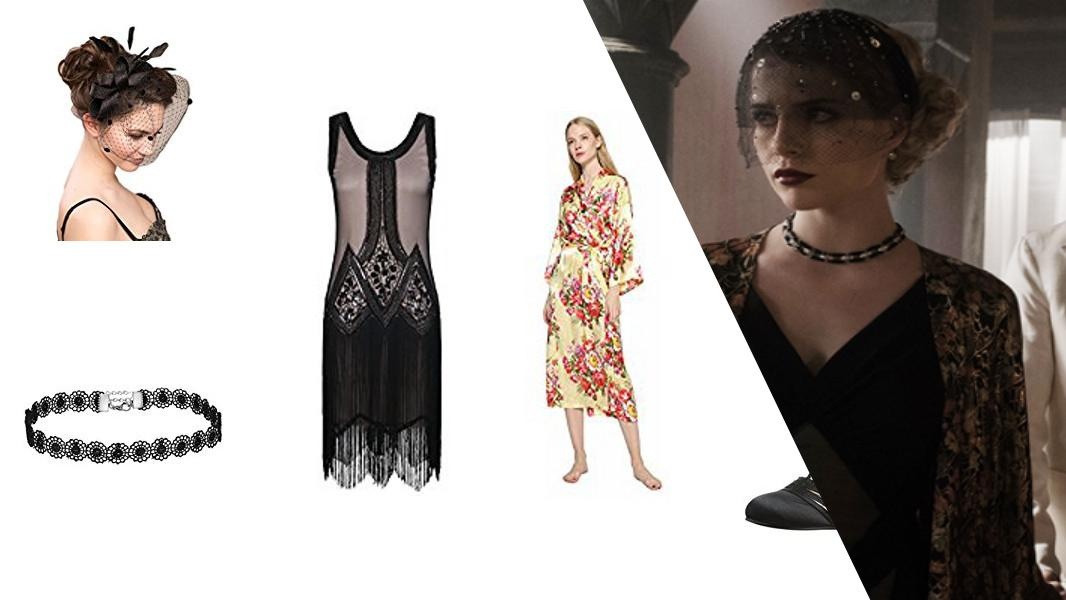
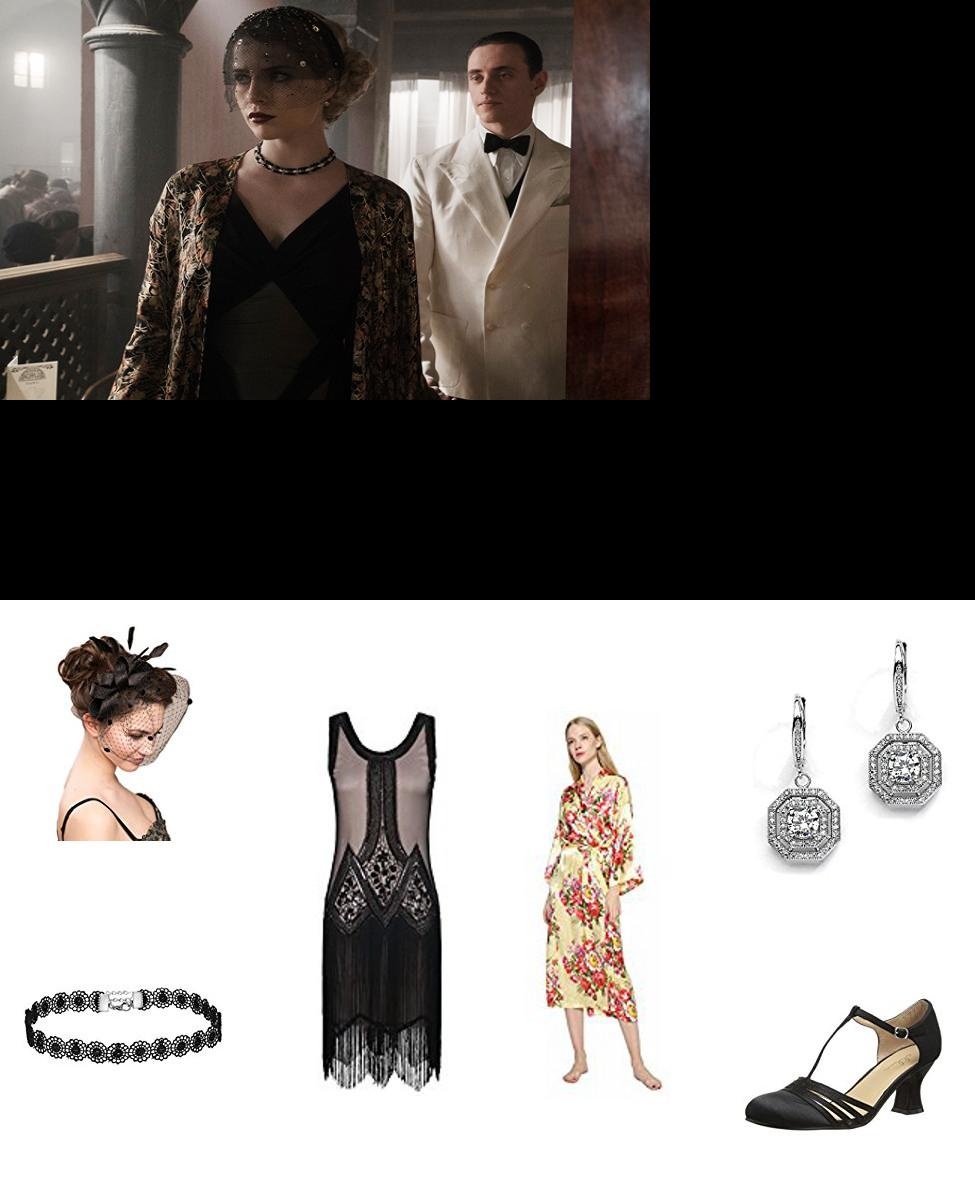



Countess Elena Andrenyi’s wardrobe centers on a contrast between structured 1930s evening fashion and loose, private luxury. Her appearance on the train relies heavily on an interplay of deep black garments layered beneath an embroidered golden-yellow dressing robe, reflecting both high European nobility and an atmosphere of guarded seclusion.
Recreating this outfit means balancing two very different garment silhouettes. The inner layer needs a slim, tailored profile that stays close to the body, while the outer robe provides dramatic volume, draped sleeves, and fluid movement when walking.
The Yellow Robe and Black Base Layer
The vivid yellow kimono robe acts as the visual centerpiece of the outfit. Rather than a stiff traditional kimono with an obi, Andrenyi wears a relaxed lounge robe with wide sleeves, dropped shoulders, and decorative embroidery. A lightweight satin or silk-blend fabric gives the hem enough drape to ripple gently without clinging awkwardly to the dress underneath. Leaving the front untied or tied loosely at the lower waist keeps the dark base layer visible.
Underneath the robe, a black flapper dress or bias-cut 1930s slip dress forms the foundation. While 1920s flapper dresses often feature heavy fringe and dropped waistlines, Andrenyi’s styling leans toward the streamlined, elongated cuts of the 1930s. A black dress with subtle beading or sheer mesh paneling matches the era’s taste without competing with the bright fabric of the outer coat. Aim for a hemline that falls at or just below the knee so the outer robe remains the longer layer.
1930s Jewelry and Neckline Details
The neckline sits open beneath the robe, leaving room for dark ornamentation and vintage metalwork. A fitted black choker resting flush against the middle of the neck anchors the upper half of the costume. Velvet ribbon or lace bands with a small center clasp work well here; keep the width relatively narrow to maintain a clean line between the chin and collarbones.
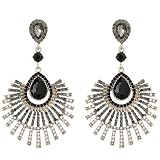
Pair the choker with geometric Art Deco earrings that hang several inches below the earlobe. Jewelry from this period favored clean lines, tiered metal drops, and faceted stones. Because the rest of the outfit relies on a strong contrast between black fabric and bright yellow silk, silver or onyx drop earrings provide subtle sparkle without overpowering the dark choker.
Headwear and Hair Styling
A black fascinator hat completes the upper silhouette, angled sharply over one side of the forehead. In the film styling, Andrenyi’s headwear incorporates small saucer or teardrop bases accented with fine birdcage netting, feather quills, or twisted loops. Pinning the base securely with bobby pins hidden beneath your hair ensures it will not shift when moving through crowded convention spaces or event halls.
For the hair, authentic 1930s finger waves or a softly sculpted faux bob tuck neatly under the fascinator. If styling your own hair or a synthetic lace-front wig, setting lotion and duckbill clips help define the ridges around the temples and ears before drying. Keeping the volume tight to the head allows the tilted angle of the fascinator to stand out cleanly.
Footwear and Movement
Footwear from this era is distinctively practical yet refined. Black T-strap shoes with a sturdy, moderate heel—roughly two to three inches—match the period aesthetic while offering stability. The central strap secures the instep, preventing slipping during long periods on your feet. Matte or semi-gloss leather finishes blend smoothly against dark stockings, maintaining the long leg lines typical of mid-thirties fashion plates.
When wearing a floor-length or calf-length robe with heels, check that the robe hem clears the floor by at least an inch. Hemming tape or a quick blind hem prevents the fabric from catching under the back of your shoe while stepping backward or navigating stairs.