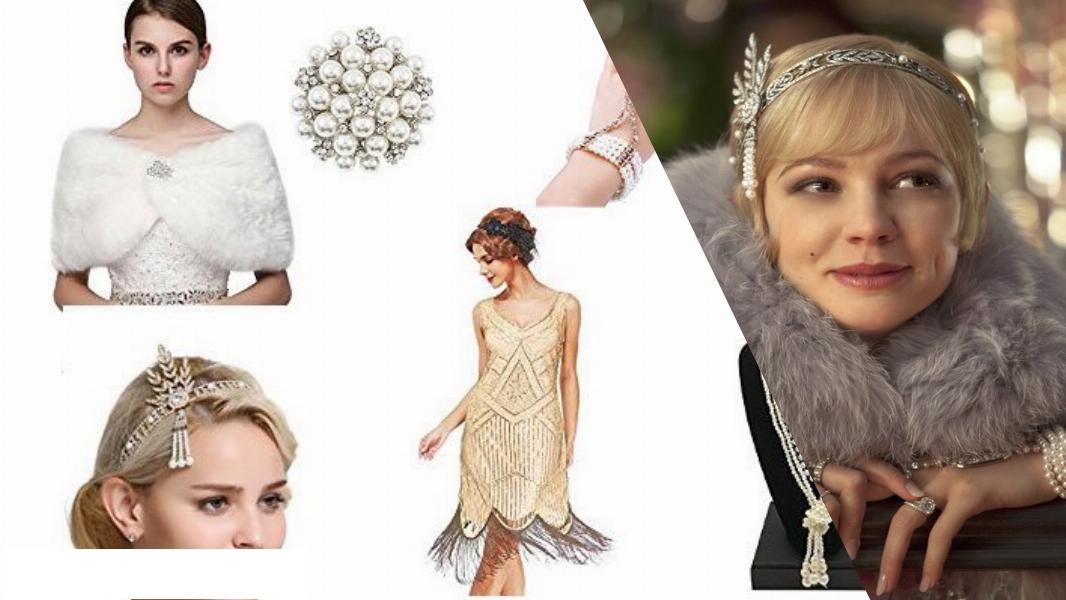
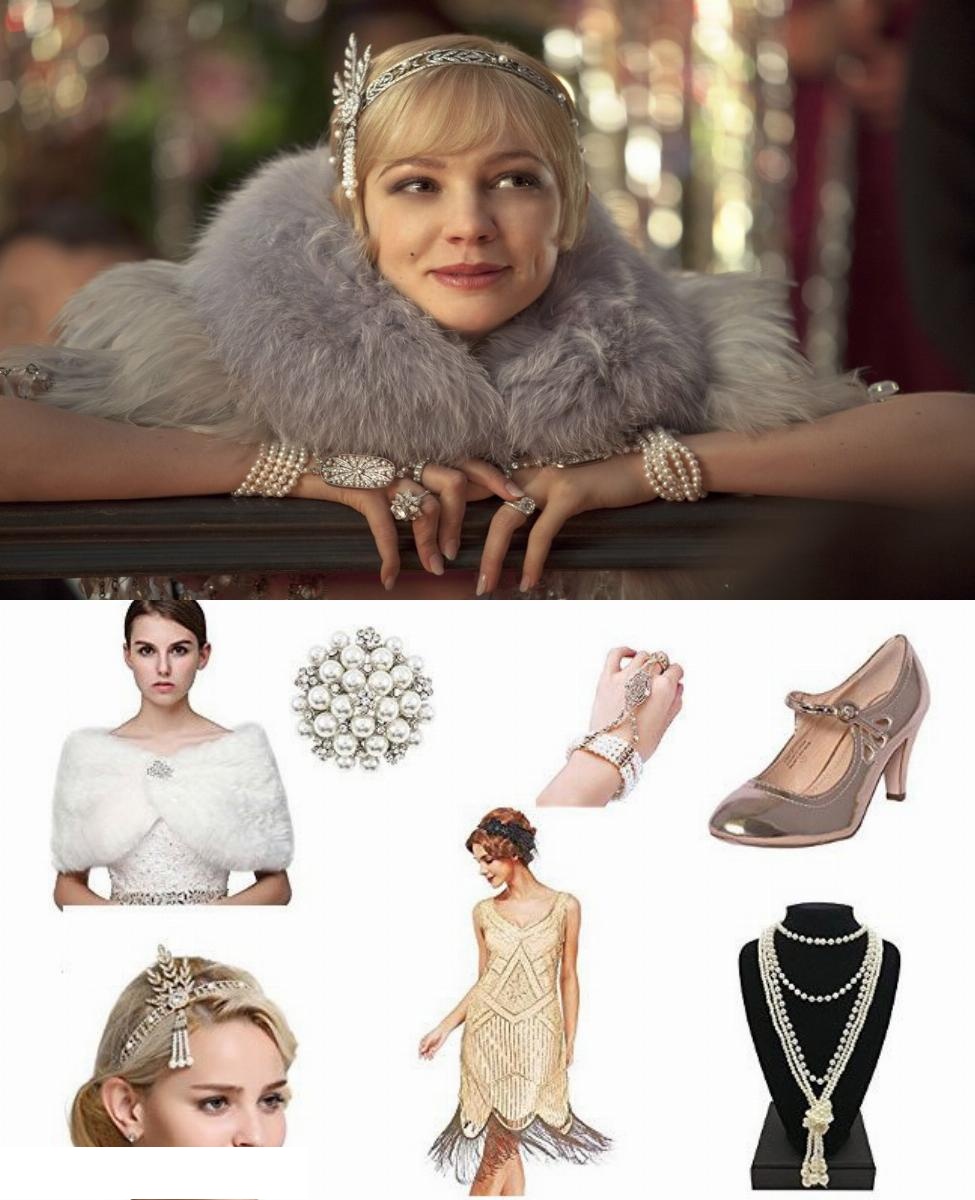
Daisy Buchanan’s evening wardrobe revolves around soft champagne tones, fluid silhouettes, and the carefree opulence of the 1920s jazz age. Instead of bold, theatrical party wear, her styling emphasizes delicate layers, understated metallics, and continuous draping that looks effortless rather than staged.
Recreating this costume centers on a dropped-waist shift dress complemented by plush textures and layered pearls. Because her palette stays anchored in beige, ivory, and soft gold, keeping fabric finishes coordinated is what ties the entire outfit together.
Selecting the Flapper Dress
Traditional 1920s evening wear abandoned structured corsetry in favor of straight, columnar lines that hung loosely from the shoulders down past the hips. A beige sequin flapper dress with vertical beading mimics this period silhouette effectively. Modern off-the-rack flapper dresses often feature stretch linings that cling to curves, so choosing a slightly looser fit helps recreate the straight drop authentic to the decade.
Length is another factor worth noting. Daisy’s party gowns typically fell near or below the knee, accented by scalloped hems or fringed borders that swayed during dance movements. If the dress features exposed sequins along the armholes or inner seams, lining those edges with soft bias tape prevents skin irritation during hours of continuous wear.
Shawl and Brooch Placement
Daisy frequently contrasts beaded evening fabrics with soft outerwear. An ivory faux fur shawl supplies that tactile contrast against the metallic sequins. Rather than bundling it closely around the neck, drape it loosely across the upper arms or over one shoulder in a relaxed wrap.
Because faux fur easily slips against smooth sequined mesh, fastening the wrap is both decorative and practical. Pinning the fabric folds with a crystal and faux pearl brooch anchors the heavy stole in place. Catching a small section of your bra or dress strap underneath with the pin provides extra stability so the wrap does not slide off as you walk.
Headpiece and Hair Styling
Headwear defines the Roaring Twenties silhouette. A gold leaf and pearl flapper headband positioned low across the forehead directly reflects the party scenes in Daisy’s narrative. Wearing the band over the brow rather than back like a modern hairband maintains historical accuracy.
For short hair, finger waves or a classic bob frame the band cleanly. If you have longer hair, gathering the lengths into a low faux bob pinned securely at the nape of the neck produces the same cropped profile without cutting your hair. Placing any ornate filigree or pendant details slightly off-center reflects the asymmetrical jewelry trends of the period.
Layering the Pearl Jewelry
Pearl accents should feel abundant without cluttering the neckline. A long knotted faux pearl necklace works best when doubled, letting one loop sit near the collarbone while the longer knotted strand falls toward the waistline. This arrangement mirrors the elongated, vertical lines favored in 1920s fashion.
Bare arms benefit from a structured cuff or stacked bands. A multi-strand 1920s faux pearl bracelet balances the wrist opposite an asymmetrical shawl drape. Elasticized pearl cuffs are comfortable for extended wear, though checking that the band sits snugly against your wrist prevents it from sliding down during movement.
Footwear and Mobility
Authentic 1920s social footwear prioritized dance floor mobility, featuring closed toes, sturdy flared heels, and supportive instep straps. Rose gold mid-heel Mary Jane shoes complement the warm sequin tones while keeping your stride steady on smooth convention floors. A modest spool or block heel provides hours of comfort that stiletto alternatives cannot match.