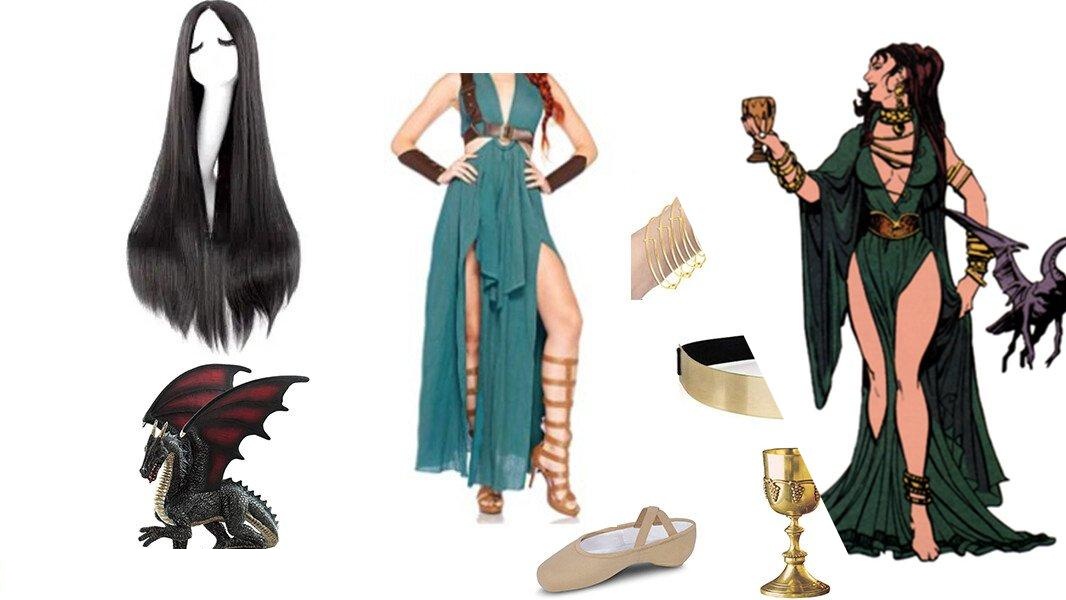
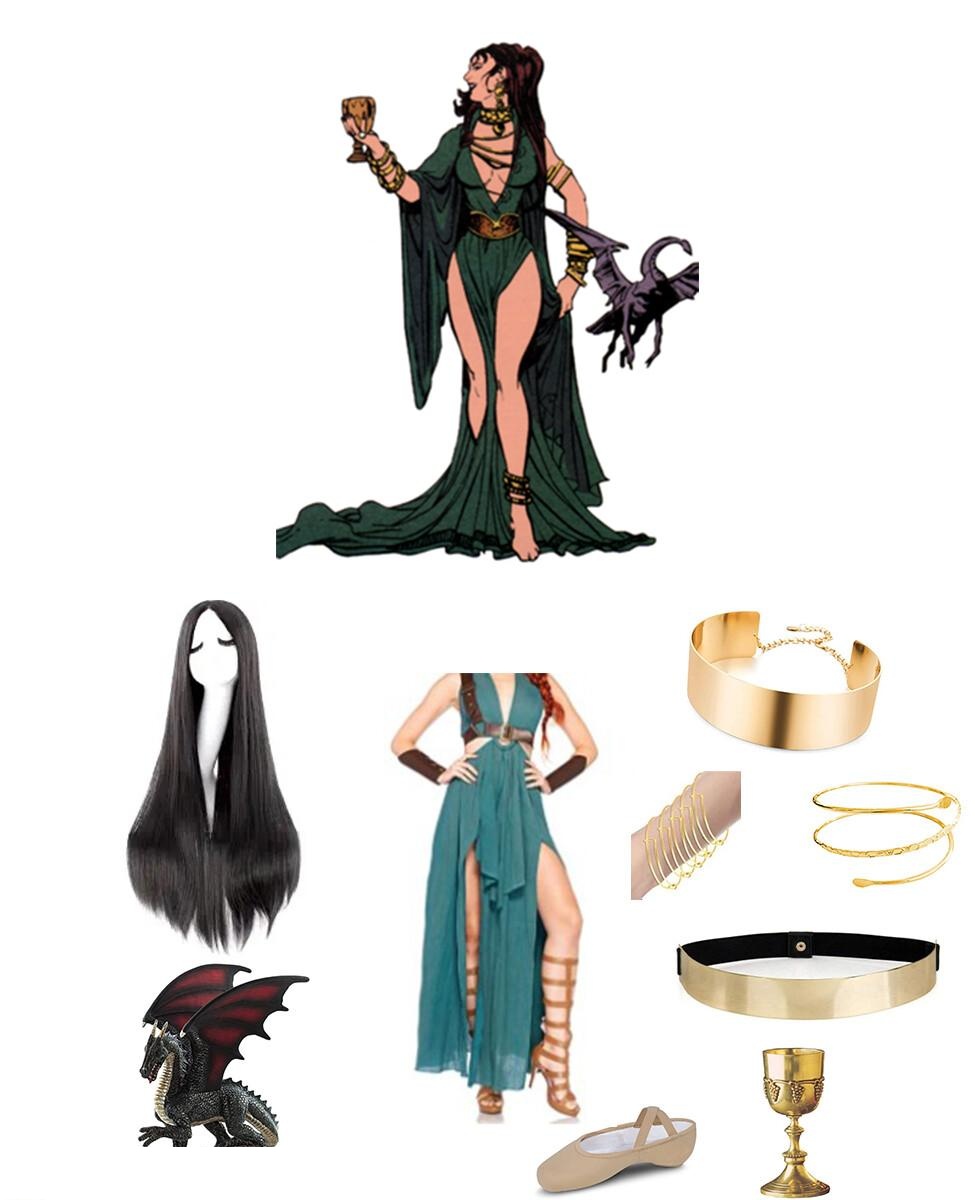





Circe‘s aesthetic blends classical Mediterranean drapery with mythological sorcery, anchored by deep emerald fabric and warm gold accents. The silhouette relies on loose folds caught at the waist, contrasted against rigid metallic bands along the neck and arms.
Because the core dress is fundamentally simple, the visual impact comes from how the jewelry sits and how the fabric gathers. Getting the balance right between the soft drapery and the structured metal keeps the costume grounded without requiring elaborate tailoring.
The Base Dress and Belt
The core piece is a full-length green dress with a soft drape. A Greco-Roman chiton or goddess-cut silhouette provides enough excess fabric to billow slightly as you walk. If the skirt is slightly long, letting it graze the tops of your feet hides modern footwear entirely, though pinning the front hem slightly higher prevents you from catching your toes on staircases.
If your dress material is semi-sheer under bright indoor convention lights, wearing a neutral slip underneath prevents unexpected translucency without adding bulk to the waistline.
Cinching the gown at the waist defines the entire shape. A wide gold belt—either stamped metallic plating or flexible filigree—breaks up the solid block of green and secures the gathers of fabric. If your belt tends to slide around on smooth satin or polyester, attaching tiny strips of adhesive hook-and-loop tape to the inside of the belt and the dress keeps it locked in place.
Gold Neck and Arm Adornments
Circe’s accessories concentrate metallic yellow-gold at the neck, upper arms, and wrists. A rigid gold choker necklace should sit flat against the base of the neck, framing the collarbones above the dress neckline. If a metal choker tends to rotate, a small square of skin-safe garment tape at the front keeps it aligned.
For the arms, combining upper arm bands with stacked wrist bangles creates a layered, ancient look. Curved serpent or coil-style arm bands usually require gentle bending by hand to match the circumference of your bicep so they stay put without pinching. Grouping several thin gold bangles on the opposite wrist adds varied texture and catches light during gestures.
Wig Preparation and Hair
A long black wig creates an immediate contrast against the emerald green fabric. Loose, tumbling waves or textured ringlets suit the untamed sorceress motif well. Shaking out the wig upside down and gently brushing through the lengths with a wide-tooth comb adds natural body. If the synthetic fibers tangle easily during movement, braiding the bottom few inches while traveling preserves the style until you are ready to put it on.
Using a mesh wig cap beneath the black wig helps contain your natural hair and keeps the hairline sitting flat against your forehead. Pinning the wig behind your ears with a couple of bobby pins keeps it anchored when looking down at your props.
Footwear and Mythological Props
Because the gown touches the floor, footwear remains largely unseen. Plain flat slippers or understated low sandals in gold, black, or nude tones keep your feet supported without disrupting the classical aesthetic.
Props provide immediate narrative context. A golden chalice references Circe’s famous transformative draughts; a lightweight cast metal or painted plastic goblet is ideal so your wrist does not fatigue during extended wear. A small dragon figurine makes an unexpected familiar to hold or secure to your shoulder, emphasizing the darker, magical side of the legendary enchantress.