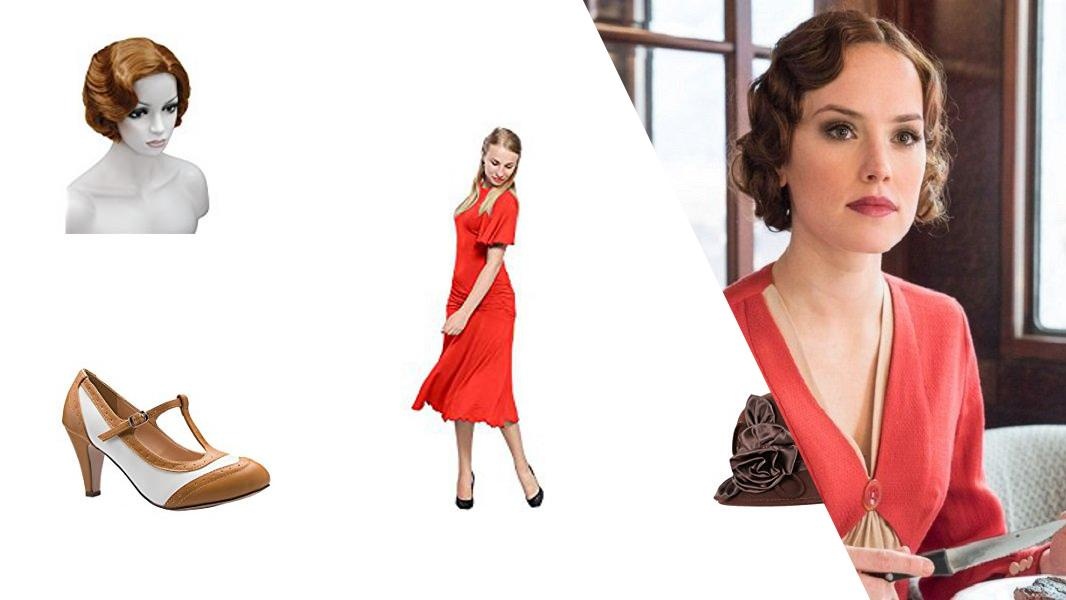
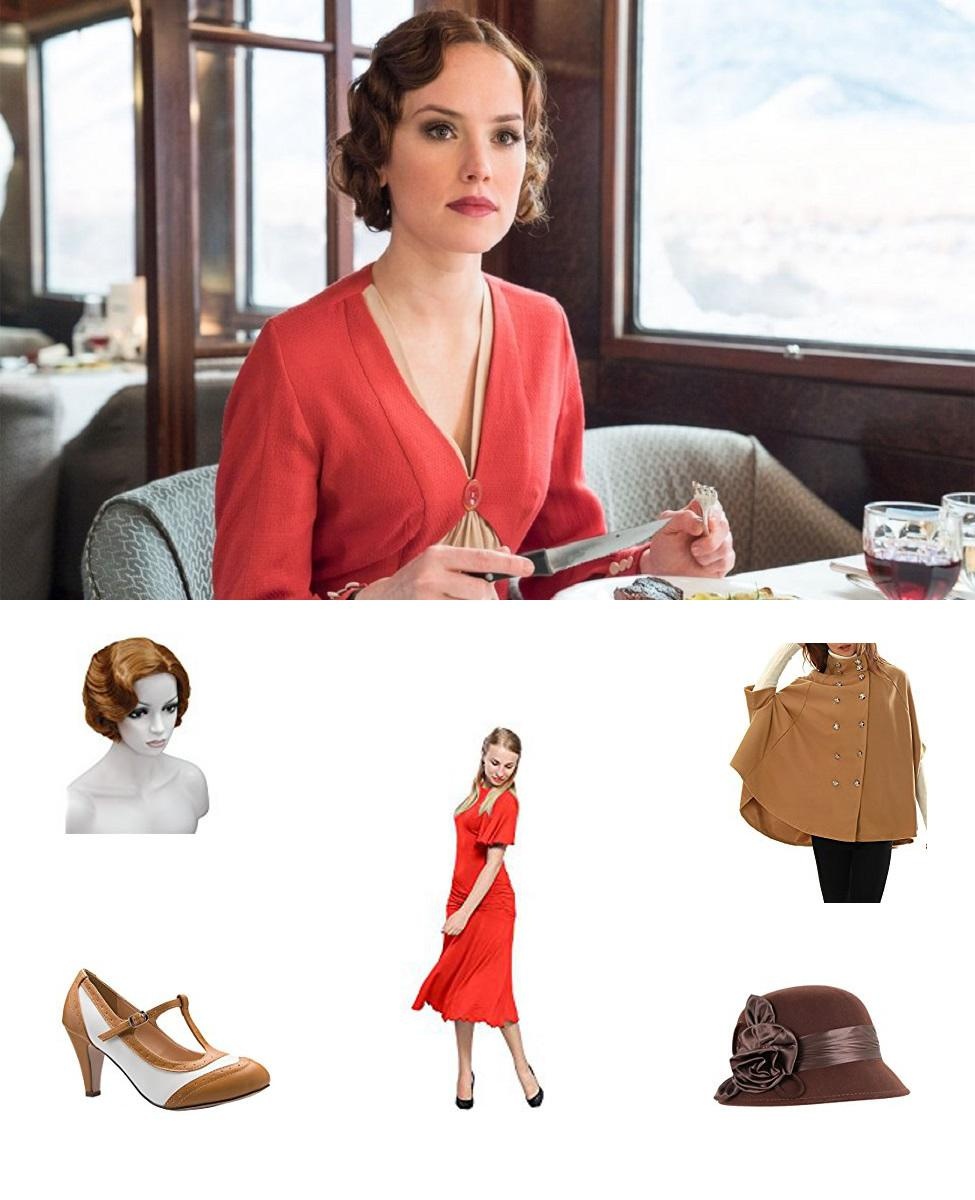
Mary Debenham’s travel wardrobe in Murder on the Orient Express is defined by sharp 1930s tailoring balanced against practical winter transit layers. The look stands apart from standard interwar period costumes through its rich crimson base layered beneath structured, warm-toned outerwear.
Recreating her appearance centers on getting the proportions right. Her wardrobe balances the elongated, fitted silhouette of the late 1920s and 1930s—clean through the shoulders, dropping down into softer pleats, and anchored by distinct period accessories that establish her role as a composed British governess.
The Cape Coat and Cloche Hat
Outerwear forms Mary‘s primary silhouette across the train platform and station scenes. The Brown Cape Coat establishes the structured, utilitarian look expected of a traveling governess while adding distinctive drape around the shoulders. The capelet overlay should fall smoothly across the upper arms without bunching, creating a clean triangular line down toward the waist.
When selecting a cape coat, pay attention to shoulder structure. A coat with light shoulder padding helps support the weight of the capelet and keeps the front lapels aligned cleanly over the dress underneath.
Pairing the coat with a Brown Cloche Hat completes the exterior travel outfit. 1930s cloche hats sit lower on the forehead than modern hats, resting just above the brow line. If the crown fits slightly loose, slipping a thin strip of adhesive hat sizing foam inside the inner sweatband secures the fit and keeps the brim from tilting backward.
The Red Drop Waist Dress
Beneath the heavy wool coat, the Red Drop Waist Dress supplies the vivid splash of color that defines Mary’s interior dining car scenes. The 1930s drop-waist cut shifted slightly higher and more form-fitting than the loose sack styles of the earlier 1920s, skimming the torso before breaking into knife pleats around the lower hips.
Fabric drape plays a major role in how the skirt hangs. A medium-weight crepe, poly-blend, or rayon knit offers enough weight to keep the pleats hanging straight without clinging. If the neckline sits wider than Mary’s modest film styling, a quick hand-stitch along the inner facing or adding a simple period brooch at the center collar brings the collarline into proper alignment.
Styling the Marcel Wave
The hair requires defined structure to reflect 1930s salon styling. The Red Marcel Wig provides the sculpted, horizontal S-bend ridges characteristic of the decade without demanding hours of wet-setting and Marcel curling tongs. The wave pattern is most visible around the temples, cheeks, and nape, framing the face beneath the hat.
Out of the bag, synthetic finger-wave wigs frequently display an unnatural high shine. Lightly dusting the ridges with dry shampoo or translucent setting powder cuts the gloss and softens the appearance under direct lighting. To keep the deep ridges defined during long wear, gently press small duckbill clips along the wave troughs and mist with firm-hold hairspray before stepping out.
Period Footwear and Finishing Touches
Mary’s footwear balances period fashion with the practical requirements of rail travel. The Two Tone Mary Jane Shoes match the 1930s aesthetic with their contrasting spectator panels and buckled instep strap. The closed round toe and moderate cuban heel provide stability across smooth floors or outdoor pavement, eliminating the wobbling common with modern stilettos while preserving historical styling.
For a finished look, pair the shoes with sheer nude or light tan stockings rather than bare legs, matching the decorum expected of a 1930s professional woman.