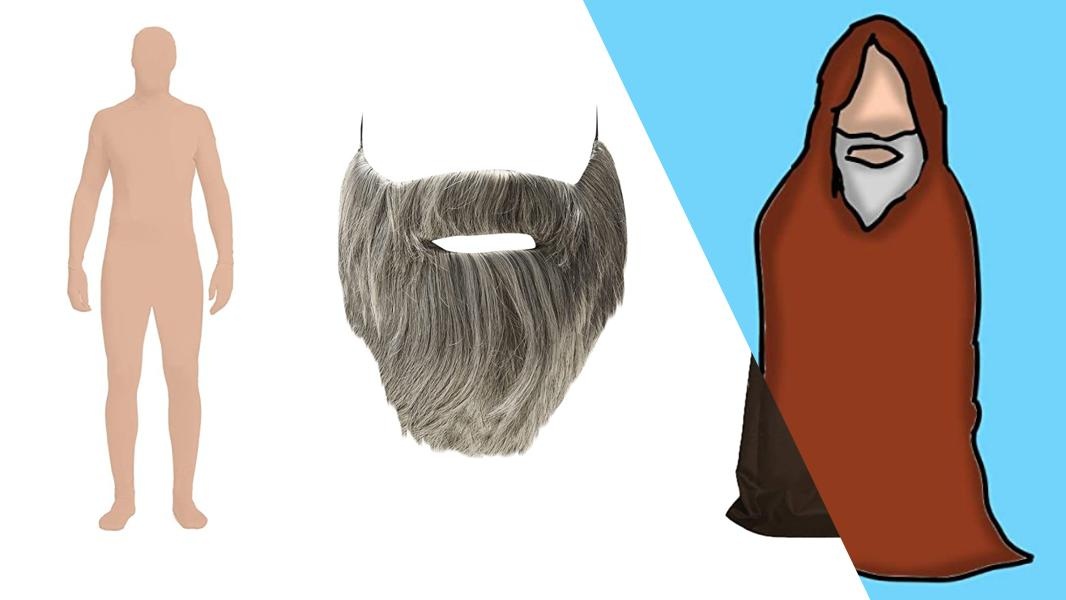
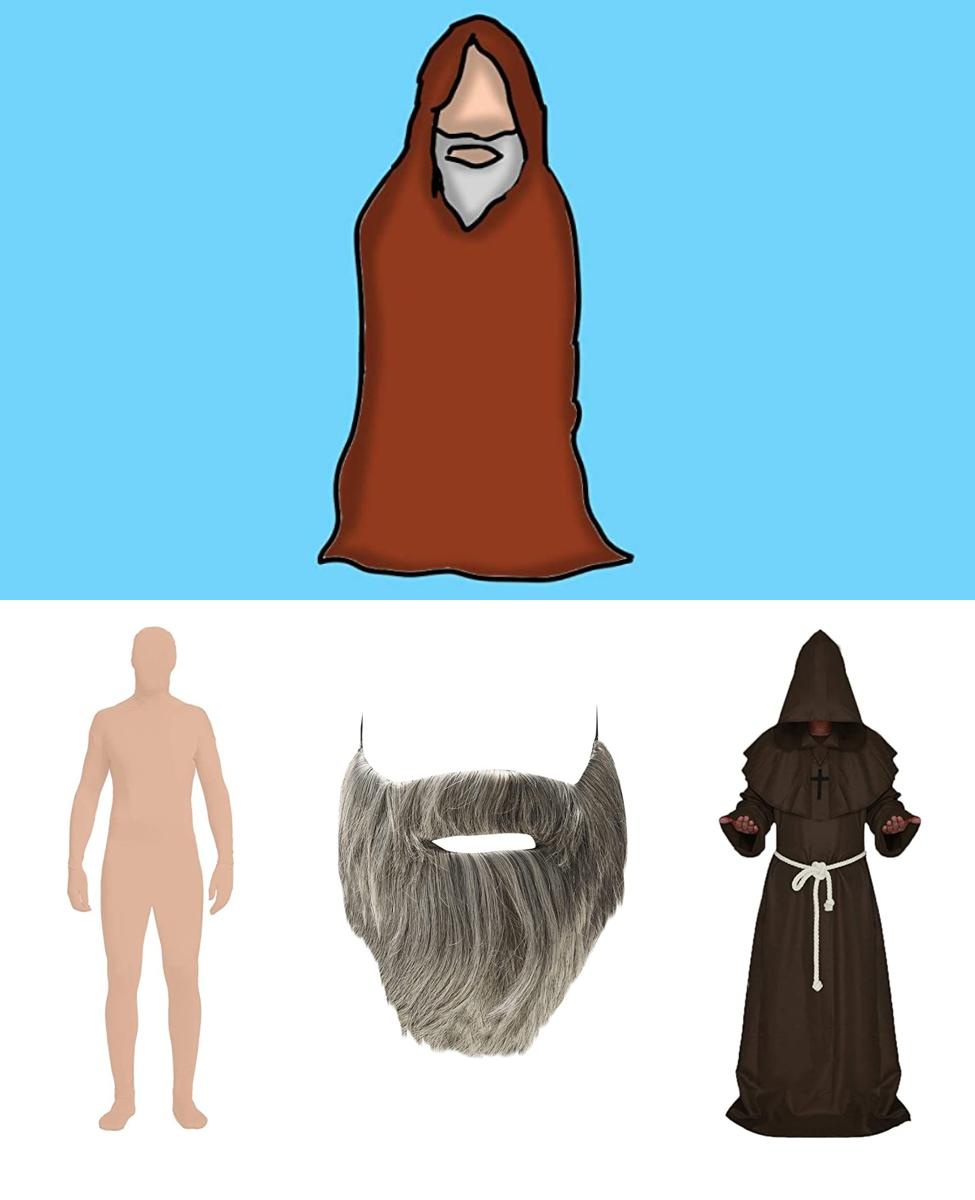



Recreating the Old Coot centers on three distinct elements: a long, heavy brown hooded robe, a disheveled grey beard, and a neutral flesh tone base layer underneath. The visual contrast comes from pairing oversized, draped outerwear with an apparently bare frame beneath, making fabric drape and clean coverage the main priorities.
Because the silhouette is minimal, individual pieces carry the entire costume. Without layers of armor, belts, or complex props to lean on, getting the proportions of the robe and the placement of the beard right establishes the character immediately.
The Outer Robe
The brown hooded robe serves as the primary visual anchor. A floor-length cut with wide, loose sleeves provides the draped, hermit-like appearance that defines the character. While pre-made costume robes often arrive ready to wear, check the hem length against your height. If the fabric drags excessively on the floor, pinning or basting the hem prevents tripping while walking through crowded spaces.
The hood needs enough volume to rest loosely over your head without pulling the front collar tight against your throat. If the fabric feels too synthetic or stiff straight out of the package, a gentle wash with fabric softener or a light pass with a garment steamer takes out harsh creases and softens the overall hang.
The Flesh Tone Base Layer
Underneath the open robe, achieving the bare appearance comfortably requires a dependable base. A flesh tone zentai suit provides continuous skin coverage while keeping the outfit completely practical for public conventions and events.
Fit matters when using a full bodysuit. The material should stretch smoothly across your frame without bunching into loose folds around the knees or elbows. Wearing seamless, neutral undergarments underneath prevents visible lines through the spandex. If you plan to wear the suit for hours, check the zipper placement; most zentai suits feature a rear zipper, so attaching a discreet ribbon pull to the slider lets you zip and unzip without needing someone to help.
Footwear also requires attention with full-coverage bodysuits. Walking directly on convention floors or outdoor pavement in thin spandex will quickly wear holes in the fabric. Slipping neutral slip-on shoes or simple flat sandals over the suit feet protects the material, or you can cut the feet open and hem the ankles to wear standard footwear underneath.
Beard Application and Styling
A wild, unkempt grey beard defines the face. Most costume beards ship flat in plastic packaging, which leaves synthetic fibers stiff and unnaturally clumped together.
Take a wide-tooth comb or your fingers and tease the beard fibers outward before putting it on. Separating the strands gives the facial hair a bushy, chaotic fullness fitting for an eccentric recluse. If the included elastic strap feels loose or slips off your ears, shorten it with a small knot or a safety pin behind the head so the mustache and chin sit firmly against your face.
Assembly and Wearability
Putting the full outfit together takes only a few minutes, but wearing it for several hours requires small practical adjustments. Because zentai suits trap body heat while offering little ventilation, keeping the robe loosely parted in front helps regulate your temperature throughout the day.
Securing the robe shoulders to the base suit with a couple of safety pins placed from the inside stops the heavy outerwear from sliding backward when the hood is down, keeping your neckline situated without constant fiddling.