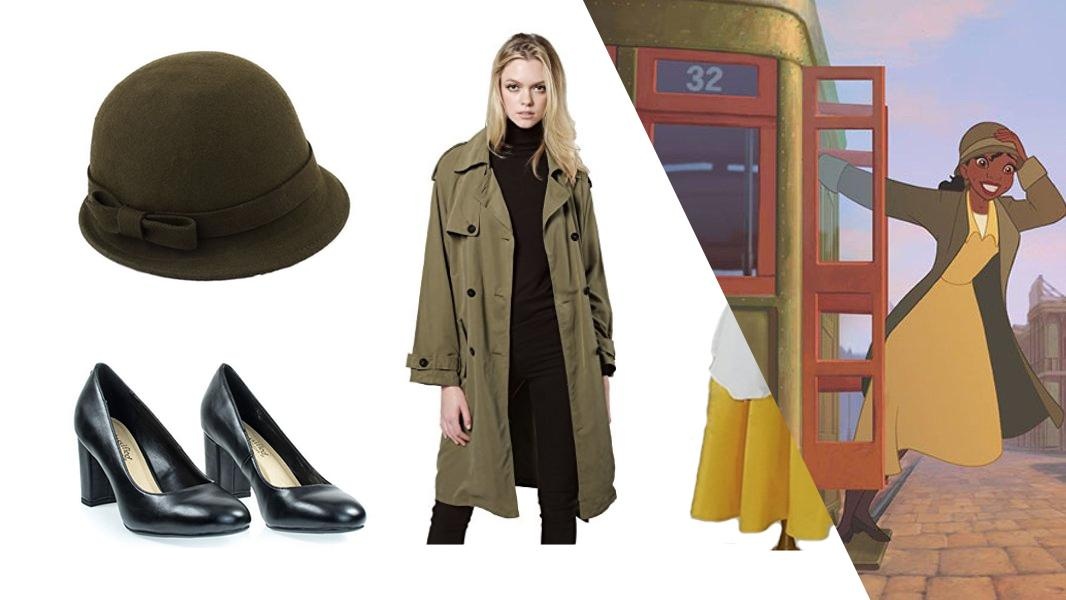
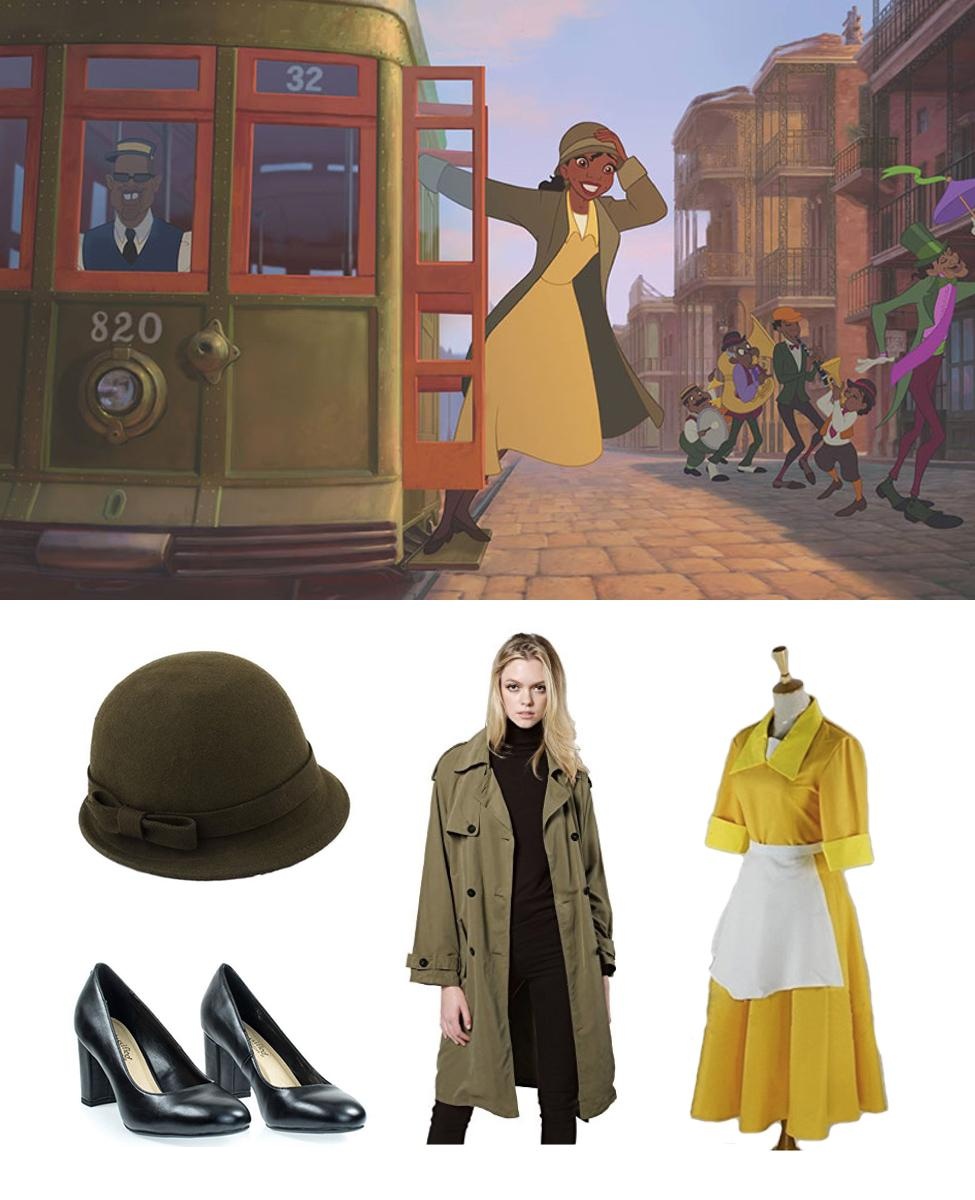
Tiana’s waitress uniform is rooted in 1920s working-class New Orleans. The core visual centers on a warm butter-yellow shirtwaist dress paired with a crisp white waist apron, but her outdoor commuting layers—an olive cloche hat and matching overcoat—give the outfit its distinct streetcar-era silhouette.
Because this is functional period daywear rather than an elaborate fantasy gown, getting the proportions and silhouette right matters far more than intricate embellishment. The fabrics should resemble sturdy cotton workwear, and the colors sit in muted, warm tones rather than electric yellows or saturated modern greens.
The Yellow Uniform and Apron
The base dress features a tailored shirtwaist cut with short sleeves, notched lapels, and a buttoned front placket. The skirt falls past the knee in a modest A-line drape. Commercial costume options like Tiana’s Yellow Dress & Apron bundle the two foundational pieces together, which eliminates the hassle of color-matching separate separates. If you build the set from vintage thrift finds instead, aim for a soft pastel yellow rather than mustard or neon.
The white apron fastens securely around the natural waist, stopping a few inches short of the dress hemline. In the diner scenes, Tiana regularly keeps a small order pad or folded white cotton towel tucked into the apron waistband. If you alter a store-bought apron or sew your own, reinforce where the ties join the waistband, since thin costume ties tend to bunch up under movement. Leaving enough ease through the shoulders and bust of the dress allows comfortable arm reach, keeping the uniform functional rather than restrictive like a modern sheath dress.
The Commuter Layers: Trenchcoat and Cloche Hat
Adding outer layers transforms the indoor server outfit into Tiana’s early-morning streetcar look. Her coat is an olive green, double-breasted overcoat that falls around knee length, shielding most of the yellow dress while walking outside. Wearing an Olive Trenchcoat over the apron establishes a structured vintage profile without adding unbearable bulk indoors. You can leave the front unbuttoned to reveal the yellow dress and white apron underneath, tying the belt loosely behind your back to keep the sides pulled back.
The hat anchors the late-1920s timeline immediately. Tiana wears a bell-shaped Olive Cloche Hat pulled snugly down over her forehead, dipping just above the brows. Felt or wool-blend cloches hold their rounded dome shape better than soft knit caps. If the hat features a narrow tonal ribbon band or a small pleated accent on the side, it fits the subtle, practical fashion of working women during the jazz age.
Period Hair and Practical Footwear
Beneath the cloche, Tiana keeps her dark hair secured in a low, neat chignon or roll nestled right at the nape of her neck. A pair of soft, short tendrils rest against her temples. When wearing the hat throughout an event, you can pin your hair flat against the scalp and concentrate your styling on those visible front curls and the bun tucked underneath the rear brim.
Footwear has to reflect someone walking blocks between two separate waitressing jobs. A pair of Black Block Heels with an almond toe, sturdy low heel, and simple vamp mirrors 1920s work shoes without creating stability problems. Matte black leather or faux-leather finishes blend into the period aesthetic naturally, whereas patent leather or thin stiletto heels feel noticeably out of place for a New Orleans diner shift.