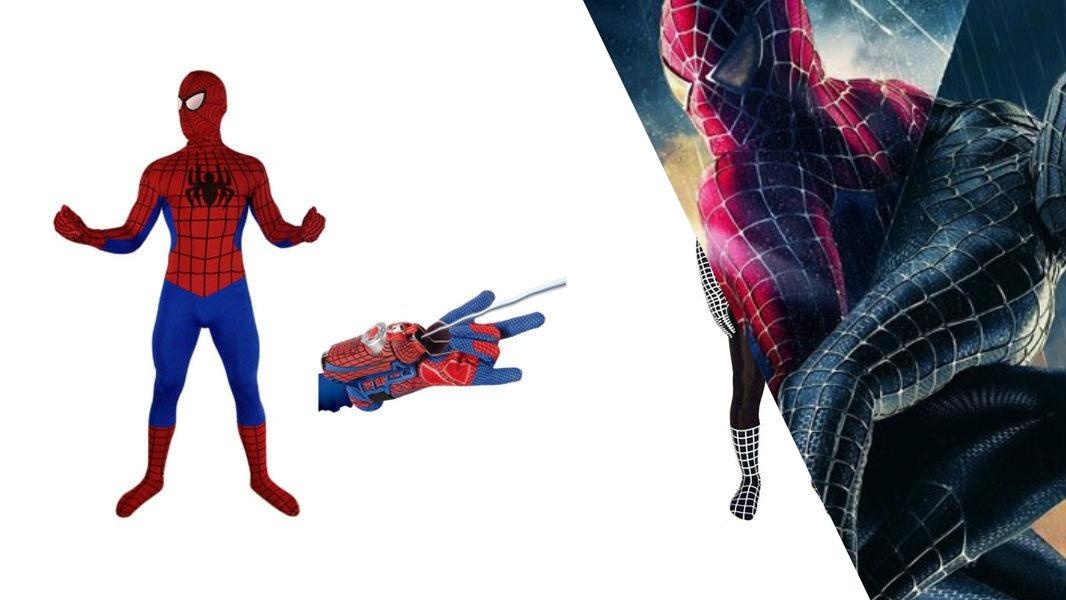
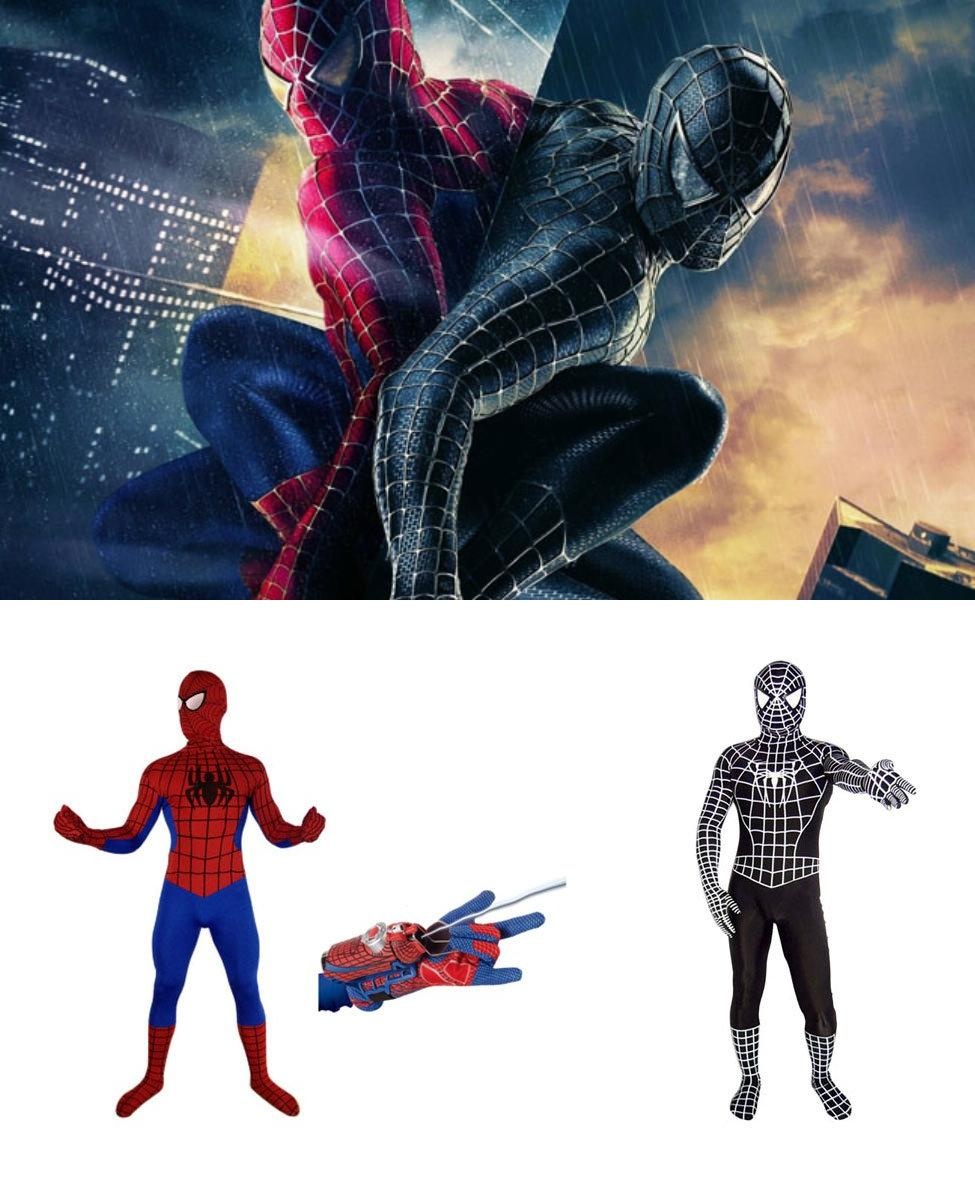
Spider-Man‘s suit is defined by a clean, second-skin silhouette, bold web patterns, and contrasting color blocking. Whether building the classic red-and-blue suit or the stark black symbiote design, the entire outfit relies on how well the fabric hugs the body without bunching or stretching the graphics out of proportion.
Because the design covers you from head to toe, small fitting details carry most of the visual weight. A smooth base layer underneath, clean seam placement, and crisp eye frames make the difference between a suit that looks sharp and one that looks ill-fitting.
The Bodysuit Foundation
A printed spandex or lycra zentai suit serves as the base for almost every modern Spider-Man build. The traditional colorway splits red across the mask, chest, shoulders, gloves, and boots, with deep royal blue filling the torso sides and legs. The black symbiote variant strips away all color blocking in favor of a sleek, all-black field anchored by an oversized white spider emblem extending across the chest and back.
Fit is critical with full-body stretch suits. If the torso is too short, the fabric pulls uncomfortably across the shoulders and groin, distorting the printed web lines. When sizing a suit, height and torso length matter more than chest or waist measurements, since stretch fabric can accommodate width much more forgivingly than vertical tension.
For anyone wearing a classic red-and-blue suit, the Spider-Man Lycra Costume provides a straightforward foundation with printed webbing and chest insignia already aligned. If you prefer the symbiote storyline, the Black Spider-Man Lycra Costume delivers the monochromatic alternative, where clean fit and fabric sheen take center stage instead of web patterns.
Undergarments and Silhouette
Skin-tight lycra reveals everything underneath, including seam lines from regular underwear. Dancers and acrobats solve this with seamless athletic compression shorts or a specialized dance belt, which creates a smooth, flat contour under thin stretch fabric.
A thin, moisture-wicking balaclava worn under the mask keeps sweat off the spandex and prevents facial features from pressing awkwardly against the fabric. It also smooths out your hair profile, ensuring the mask retains a rounded shape rather than showing hair bumps.
Mask Structure and Eye Lenses
The mask’s visual punch comes down to the eye frames. Comic and film suits use rigid or semi-rigid frames with white mesh or micro-perforated vinyl inserts. These allow outward vision while maintaining an opaque white appearance from the outside.
If your base suit has soft fabric eye patches, upgrading them to raised rubber or 3D-printed frames dramatically sharpens the face profile. Many cosplayers pair these with an internal faceshell—a rigid plastic or foam half-mask worn inside the fabric hood. A faceshell stops the fabric from collapsing around your mouth and nose when you breathe, keeping the silhouette crisp and making it easier to speak clearly.
Gloves and Wrist Details
Full-suit gloves built directly into the sleeves can make handling phones or convention badges tricky. Having detached gloves or an invisible wrist zipper allows you to slip your hands free without peeling off the entire upper suit.
If your base suit doesn’t include reinforced hands or you want dedicated handwear that stands up to frequent handling, the Spider-Man Ultimate Gloves offer a separate option with printed web detailing that can match or replace integrated suit fingers.
Adding Soles for Convention Floors
Walking directly on lycra feet will wear through the fabric within an hour on concrete or asphalt. Cosplayers typically glue thin rubber shoe soles or low-profile aqua shoes directly to the bottom of the suit feet using flexible contact cement.
Another approach is inserting thin slip-on shoes inside the suit feet, provided the fabric has enough give to stretch over the sole without tearing the surrounding seams. Trimming excess rubber from the perimeter keeps the sleek foot profile intact while protecting the fabric from abrasion.