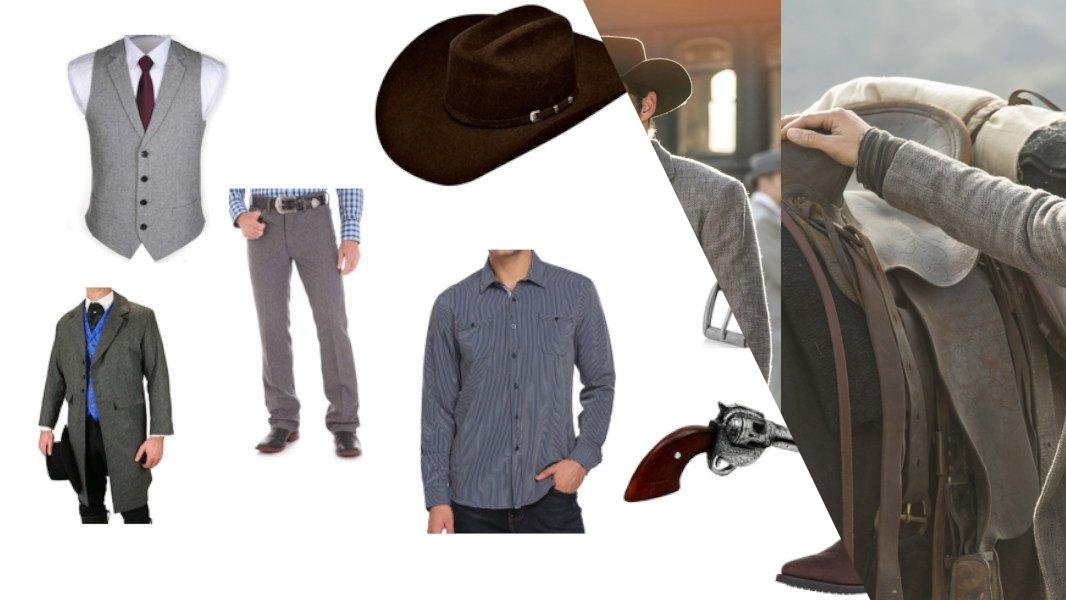
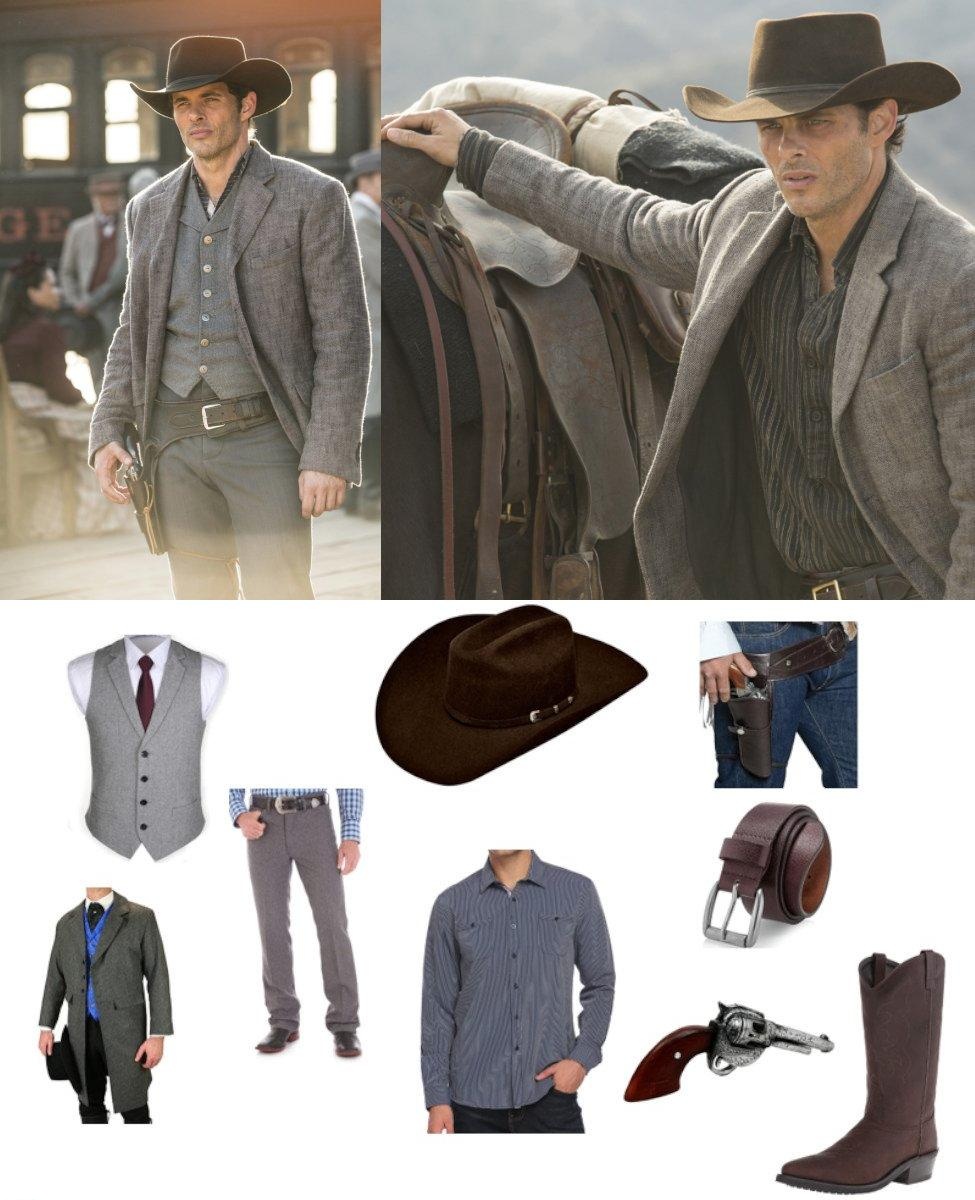
What You’ll Need




Teddy Flood’s silhouette is built on understated, functional late-19th-century frontier tailoring. Unlike the flashier outlaws or affluent guests wandering Sweetwater, Teddy wears an honest ranch hand and hired protector rig defined by dusty charcoal tones, tailored wool textures, and practical leather gear.
The overall appearance comes from coordinating several shades of grey broken up by dark leather and a subtle stripe at the collar. Because the outfit relies on period-style garments rather than exaggerated fantasy armor or stylized props, silhouette and garment fit carry most of the weight.
The Frock Coat and Vest Layering
Teddy’s outer layer is a mid-thigh grey tweed frock coat with structured shoulders, wide notch lapels, and a straight cut through the body. A standard modern suit jacket ends too high at the hip and throws off the long, draped proportions of the character. If you are sourcing an off-the-rack frock coat, choose a heavy twill or wool-blend fabric with enough stiffness to hold its shape while walking. A light misting of diluted brown or beige fabric paint along the lower hem and cuffs helps tone down any artificial factory sheen, giving it the weathered appearance of dusty trail riding.
Underneath the coat sits a light grey tailored vest. On screen, this piece provides sharp visual contrast against both the darker coat and the shirt underneath. It fastens high on the chest with five or six buttons, showing just a narrow triangle of the shirt placket. Leaving the bottom button unfastened is standard for period vests and prevents the fabric from bunching up around your gun belt when seated.
Frontier Shirt and Trousers
Beneath the vest, Teddy wears a soft blue striped shirt with thin vertical stripes and a traditional button front. The muted blue prevents the outfit from turning into an unbroken wall of monochrome grey. A standard band collar or a soft fold-down collar both match the period aesthetic, but you will want the cuffs to extend just past the jacket sleeves by about a quarter of an inch.
For trousers, straight-leg grey rancher dress jeans or flat-front wool trousers match Teddy’s clean lower half. They should sit at your natural waist rather than riding low on the hips. The legs need enough room through the calf to accommodate tall riding boots underneath without pulling tight or creating awkward lumps along the shin.
Leather Rig and Sidearm
Teddy carries his revolver in a dedicated brown leather holster that hangs slightly below the normal waistline on the right hip. A separate wide brown leather belt threads through the trouser loops to keep the pants positioned, while the heavier holster rig sits angled over the right hipbone. Cinching the thigh tie or securing the hammer thong keeps the holster stable when moving through crowded convention floors.
A classic single-action western revolver finishes the holster setup. While a novelty sheriff’s gun provides the correct cylinder and barrel profile, convention security desks require an orange safety tip or non-firing inspection, so checking venue weapon guidelines in advance prevents issues at the door. A quick dry-brushing of gunmetal acrylic over plastic prop parts gives cast metal weight to an otherwise lightweight prop.
Hat and Boots
Teddy wears a medium-brown felt cowboy hat featuring a moderate cattleman crease and a gentle upward roll on the brim sides. The hat sits straight across the brow rather than tilted back. If your hat arrives stiff or with flat brim edges, steam from a kettle softens the brim fibers enough to shape the curve with your hands until it cools.
Dark brown cowboy boots ground the entire build. Opt for a pair with a traditional walking heel and a rounded or almond toe rather than a sharp snip toe. Since the trousers fit over the boot shaft rather than tucking inside, the leather only needs to show from the ankle down, letting you focus on comfortable soles for long hours on foot.