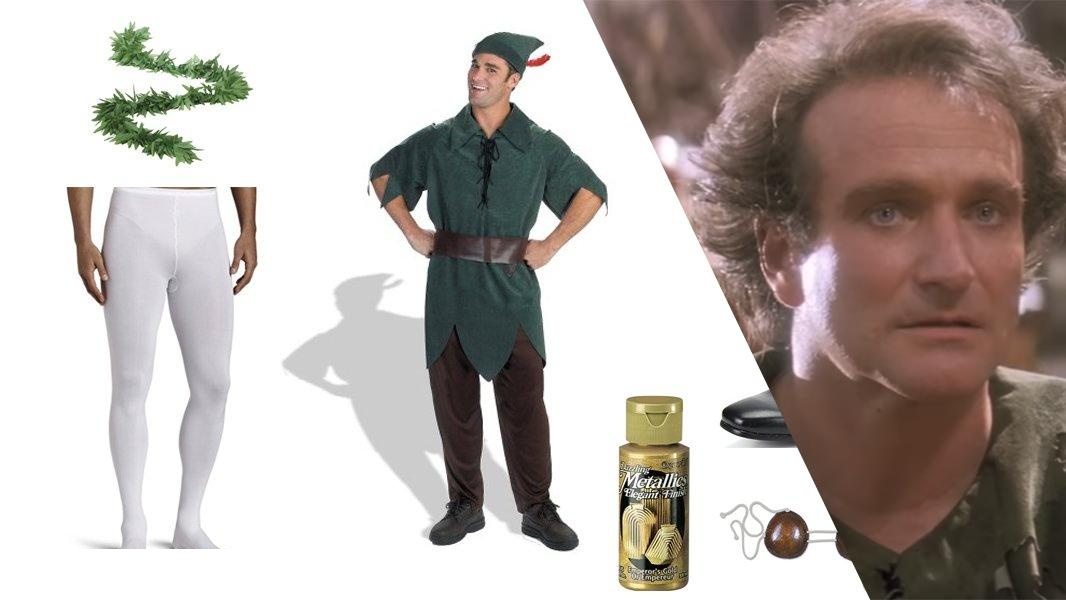
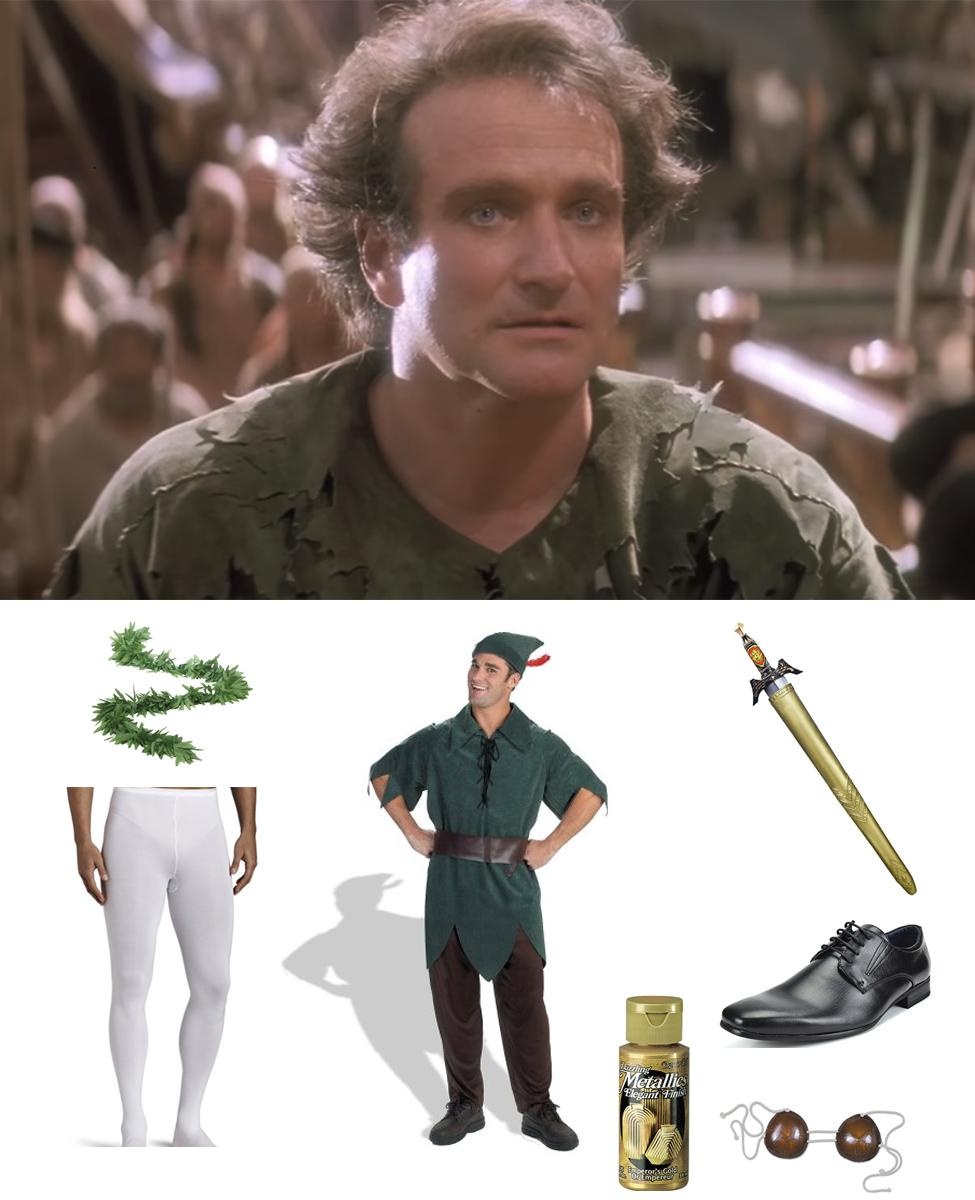


Peter Banning’s transformation in Hook gives the classic Peter Pan silhouette a rugged, lived-in overhaul. Instead of a tidy storybook tunic, Robin Williams wears an outfit that feels scavenged and assembled in the woods of Neverland—ragged hems, deep forest tones, and wild foliage integrated directly into the garments.
Pulling off this look comes down to distressing the base pieces and tackling one surprisingly straightforward prop modification. The costume strikes a balance between familiar fairytale elements and the rough-and-tumble energy of the Lost Boys, so subtle weathering makes a massive difference.
Modifying the Tunic and Legwear
A commercially available Peter Pan Costume serves as a practical base for the upper body, giving you the pointed hemline and open collar without having to draft a pattern from scratch. Most store-bought tunics use lightweight synthetic fabrics with very crisp, clean edges. To break that factory-fresh appearance, cut uneven notches along the sleeve hems and collar, then scuff the cut edges with a wire brush or coarse sandpaper to create natural fraying.
The signature feature of the Hook tunic is the cluster of woodland greenery framing the neckline and shoulders. Taking a Green Leaf Vine Garland, snip it into smaller leafy clusters rather than wrapping a full, unbroken strand around your neck. Hand-stitching individual sprigs or securing them with fabric glue across the collarbone and down the upper chest gives the appearance of foliage growing straight out of the seams. Mixing lighter and darker leaves prevents the collar from looking flat under convention lighting.
For the legs, a pair of White Tights provides the base layer beneath the tunic. Pure optical white can feel jarring against the distressed, forest-green fabric, so toning it down helps. Steeping the tights in a bath of diluted black tea or warm water with a drop of tan dye takes the stark brightness down to an authentic, weathered cream shade.
Building the Coconut Hilt Sword
Peter’s sword stands out as the centerpiece prop of the film, defined by its curved golden basket hilt originally wielded by Rufio before returning to Pan. Most costume cutlasses have a standard D-guard, which misses the distinctive rounded profile seen on screen.
An inexpensive toy Sword provides the blade and grip core. To build the iconic bowl guard, take one cup from a Coconut Bra For Sword. The natural curvature and textured surface of a coconut shell match the screen prop remarkably well. Use a rotary tool or a small hand saw to cut a vertical channel through the center of the shell, wide enough to slide over the sword blade until it sits flush against the handle. Secure the shell to the guard base with a generous application of two-part epoxy or heavy-duty contact adhesive.
After the bond cures, prep the hilt assembly and apply Gold Paint For Sword across the coconut shell, crossguard, and pommel. A rich metallic gold provides the core finish. If you want to accentuate the rough grain of the coconut, lightly wipe a thinned wash of dark brown acrylic into the crevices and wipe away the excess with a paper towel. This highlights the natural ridges and makes the guard look like forged, antiqued gold.
Footwear and Styling
Rather than pointed elf boots or soft slippers, Peter Banning spends his time in Neverland running in Black Dress Shoes—a visual reminder of his corporate life as an overworked London attorney before rediscovering his past. A simple pair of leather or faux-leather oxfords fits the character well. Because dress shoes have stiffer soles, choosing a pair that accommodates cushioned insoles or thick socks keeps things manageable during long convention days.
Style your hair with a bit of volume and controlled messiness, keeping the silhouette slightly tousled to match Pan’s flight training. With the weathered tunic, leafy neckline, and custom golden blade assembled, the entire presentation feels grounded, functional, and faithful to Spielberg’s 1991 adventure.