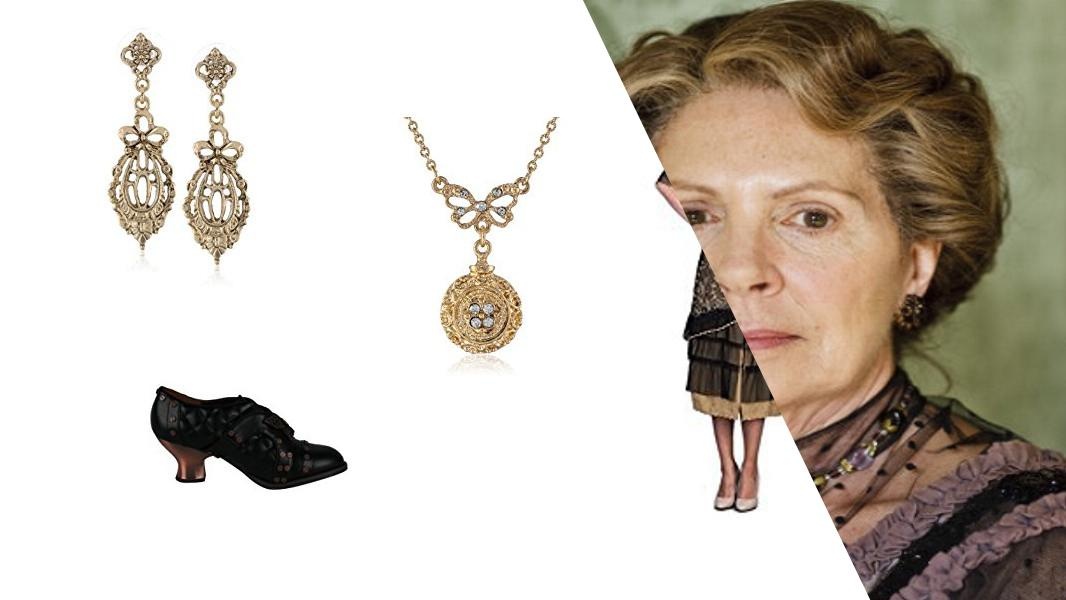
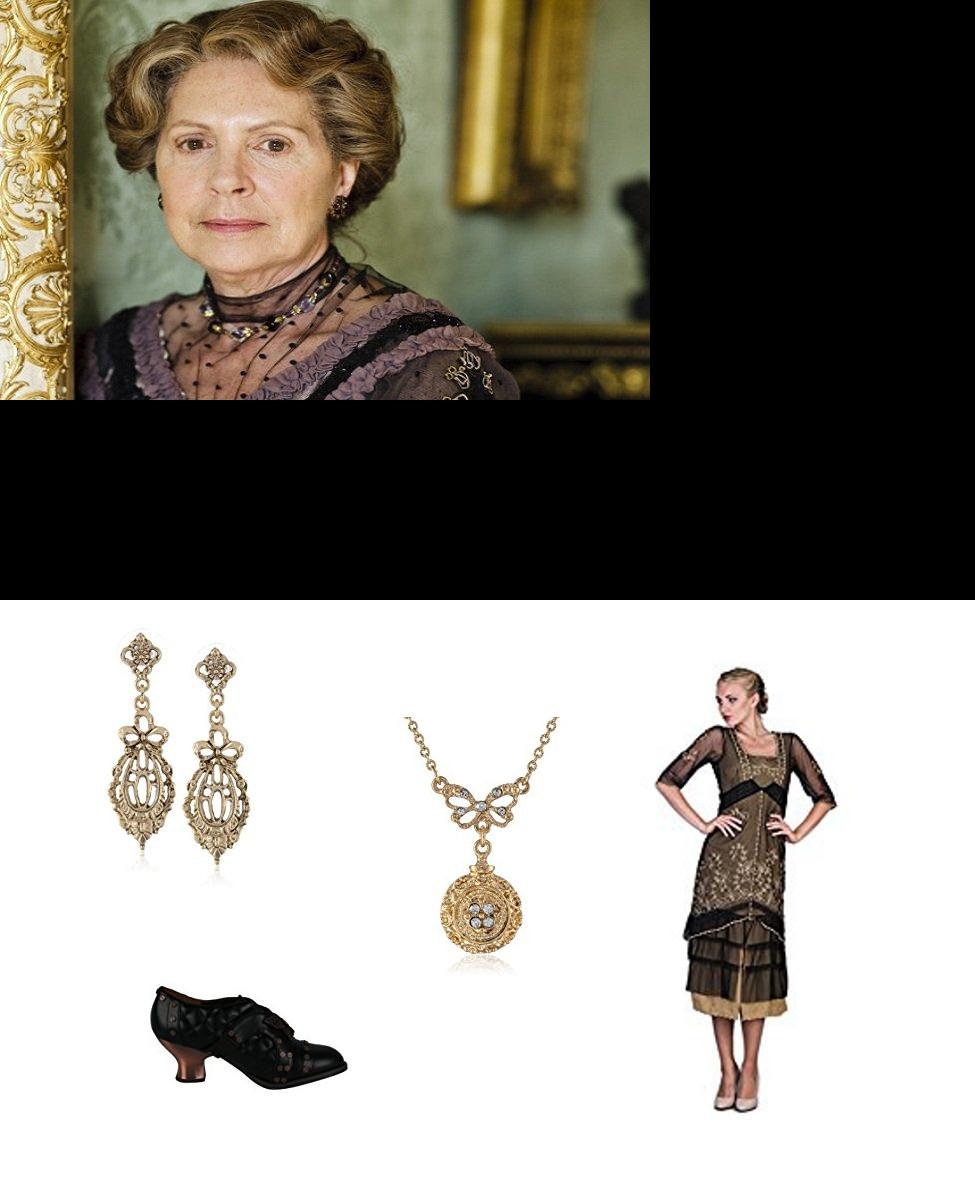
Isobel Crawley’s wardrobe reflects her practical, reformist mindset within early 20th-century British society. Unlike the extravagant, heavily draped fashions favored by the Crawley daughters or the strict aristocratic opulence of the Dowager Countess, Isobel dresses with sensible dignity. Her outfits lean heavily on structured Edwardian day and evening cuts that emphasize tailored lines, high necklines, and understated ornamentation.
Recreating her appearance comes down to balancing period-accurate silhouette with restraint. The visual anchor is an early 1910s floor-length gown featuring modest contrast detailing, paired with period footwear and small, tasteful pieces of jewelry that suggest quiet gentility rather than ostentation.
The Edwardian Gown Silhouette
Isobel’s dresses consistently feature the modest tailoring typical of middle-class Edwardian women of mature years. The waist sits naturally rather than overly cinched, leading down into a straight, floor-length skirt with minimal flounce. Dark fabrics accented by gold or metallic lace across the bodice and sleeves give the garments structure without drifting into the layered pastels worn by younger debutantes.
The Black and Gold Edwardian Dress serves as an accessible base for this look, matching the long sleeves and dark contrast panels Isobel wears for formal dinners and evening gatherings at Downton. While commercial costume gowns often use lighter synthetic blends than authentic wool or heavy silk jacquard, the high collar and defined waist establish the correct historical profile immediately. If the skirt hangs too limply out of the package, a lightweight petticoat or modest bum pad underneath helps maintain the structured bell taper down to the floor.
Period Footwear and Skirt Length
Because Edwardian skirts were cut to skim just above the floor rather than trail along the ground for daily activities, your footwear will show whenever you walk, climb stairs, or sit. Victorian Ankle Boots provide the exact profile needed: a pointed or slightly rounded toe, a curved Louis or spool heel under two inches, and lace-up or buttoned fronts that hug the ankle snugly.
Standard modern dress boots with chunky lug soles or wide ankles look jarring under an early 1910s hemline. Keeping the boot shaft narrow ensures the skirt hem drapes cleanly over the instep without catching on buckles or protruding hardware.
Jewelry and Hair Styling
Isobel rarely wears flashy diamonds or heavy tiaras. Instead, her jewelry choices lean toward antique filigree, delicate gold chains, and understated heirloom designs that sit close to the collarbone.
A Gold Filigree Pendant worn on a relatively short chain rests naturally above the high neckline or nestled against the front lace panel of the bodice. Complementing it with Gold Filigree Earrings keeps the metallic tones consistent across your face and collar. Drop earrings that dangle just below the lobe without sweeping the shoulders reflect the restrained, dignified styling she maintains throughout the series.
For the hair, Isobel wears a soft, pinned Edwardian Gibson-style pompadour with subtle volume around the temples and a neat bun or chignon gathered at the back of the crown. Light graying spray or dry shampoo worked into the temples helps replicate her mature silver-streaked look if you are styling your natural hair or an unstyled lace-front wig.